Carolina Maria de Jesus: Introduction

The diary of Carolina Maria de Jesus has to be one of the most imperative, timely, relevant journals I’ve read in my life thus far. The veracity of de Jesus’ testimonies and the elemental immortality of the circumstances through which she was writing the few years her journal covers sanctions her work as redoubtable, gospel. As a modern day Black woman diarist, I find her chronicle of testimonies to be necessary for our study: it fills a valuable place in the Black female diary literature canon where the Diaspora, colorism, the technology of poverty, politics and Black single motherhood intersect. For any of my sisters curious about the efficacy of keeping their lives through the morbid, shocking, abject, tragic– and the moments of fleeting gladness that pierces through some of life’s darkest chapters, this diary is for your imbibing and validation. As one who has endured times of housing insecurity, lack, hunger, and social marginalization, Carolina de Jesus’ diary RELIEVES me in a society that gaslights me. The spectrum of emotions contained in her journal along with the setting in which she was recording her daily life makes her diary a critical lodestar for any of us heavy with grief yet urged nonetheless to keep our journals…
“Senhor Contrini came to tell us that he was a candidate in the next elections.
We of the favella have not been protected by you, Senhor Contrini.
We don’t know you, and you don’t know us.
-Carolina's diary, August 3, 1958
A dark-skinned Afro-Brazilian woman, a single mother and “favelado” (the term for those who inhabit the favelas in Brazil), de Jesus journaled through destitution, her children’s illnesses from their living conditions, being surrounded by domestic and street violence, enduring the panderings of lying, condescending politicians, recognizing the hypocrisy of Christianity, and enduring the conundrum that is the de facto, invisible caste systems manifesting when one is dark-skinned AND Black AND woman AND single mother AND whose children have different fathers.
In all, I find Momma Carolina’s journal, Child of the Dark (often wrongfully categorized as a memoir, which is not the same as a published diary: memoirs are recollections of one’s past from a single moment in the present, and the diary is firsthand accounts throughout one’s times, with accompanying dates.), to be a mandatory read for teastained women diarists for several salient reasons. Firstly, because it’s a journal kept by a DARK SKINNED Black woman living under a racist set of systems reliant upon the foundation of colonisation and chattel slavery just the same as those of us in the USA. As a dark-skinned Black woman descendant of the Middle Passage, her life automatically bears distinction because since the early days of europeans designing the concept of race, people have long been socialised to mistreat and abuse dark-skinned Black peoples, resulting in cascading effects of systemic racism and normalised brutality against those with richer melanin. In short, before reading her words we already know that her lived and psychological reality was brutal JUST because of her dark skin.
We’re living in a time in which “Black” is expected to expand to include biracial and multiracial peoples. However, such hybrids of Blackness have historically counteracted efforts of Black (two Black parents, two sets of Black grandparents) sovereignty. Since Emancipation, paper bag tests and other discriminate measures have been made to usher the palest of us to the forefront as representatives of the “best” of our people. This reinforcement of proximation to whiteness has usually meant that our people have been victimised by colorise and classism, manifested as biracial being preferred and chosen to run organisations, clubs, campaigns and HBCUs; as whites vocally choosing biracials for their white ancestry and designating them as better ambassadors of Blackness to speak for the whole of us, etc. Dark-skinned Black women have been treated as societal stains, deemed a servant class, assumed to be uneducated and uncouth; hired as mammies and general embarrassments of who Black women are and what we carry. Throughout our history dark skinned Black women are treated as memories that society and Black men wish to forget, with lighter skinned Black women or biracial folks portrayed as the epochal evolution of Blackness in the USA. What better way to display the submissiveness of one’s culture than to put forth those with the complexion and the lack of complexity as those who do not intimidate the coloniser? This isn’t about skin but the mindset that comes with those who believe that their complexion and its situation of them in a racist, classist world, means they are the best a culture has to offer. To this day dark skinned Black women are viewed with condescension and irrational stigmatisation rooted solely in eugenicist ideology and the white supremacist mandate to forget their atrocities. Dark skin carries the phenotypical memory of our being stolen from Africa. It’s a memory Black men often do not wish to handle and white men wish to dilute. So here we have Carolina Maria de Jesus: she doesn’t pass for white, her skin does not relent in announcing to the colonizer/settler what he has committed, and whose physical presence along with her relentlessness in indicting the coloniser’s evil systems infringing and intercepting her humanity creates a consternation for the agents of evil who want to go unnamed and untraced in their insidiousness. Light skinned women have always been given the benefit of ambulating the world of Blackness and whiteness with far less resistance than dark-skinned women; this ease creates bifurcation in the two Black women’s experiences, where one has opportunities to have a softer gaze from the enemy which the other will never escape. The dark skinned Black woman is demonised, and she is most understanding of what the devil is, does, weaponises, and is capable of. While the light skinned Black woman or biracial person can be shielded from the malintent of the enemy, the dark skinned Black woman with tightly-coiled cloud atop her head is relegated to invisibility, treachery, sabotage and unflinching violence. She is considered as an animal, a nuisance, and a threat to the genetics and messaging of white supremacy: if she is chosen by a Black man the white race is guaranteed expiration; if she uses her voice to announce gospels, she can turn the world’s gaze as they realise she is the closest thing to God. When she is thriving, her presence can stir conscience away from evil; can denote inhumane agendas as she has experienced them in their fullest capacity, and can lead in the dismantling of systems tailored to her disenfranchisement as a blueprint for global disenfranchisement. This capacity is what makes Carolina Maria de Jesus’ diary a threat, a weapon today.
In the western hemisphere, dark-skinned descendants of the Middle Passage experience the truest, most sinister truths about this world, its insidious motives and real character. The coloniser/settler flagellates dark-skinned peoples with unfettered evils, yet manufactures propaganda that shows the settler himself as a benevolent saviour and the dark skinned being as a devil in need of exorcism from the settler’s faux-edenic strivings— think King Leopold in the Congo; then generations later, Apple Inc. in that same area. In this space of propaganda, the globe can see atrocity committed against dark-skinned peoples and still accept the systems constructed by the coloniser as valid. However, in all of his evils the coloniser fails to consider the indicating, revealing quality of his corrosive actions: The treatment of dark-skinned Black women intimates the Messianic position that dark-skinned peoples have in our time, our day, our generation. Rejection, violence, exploitation, dejection, disenfranchisement, targeting, apartheid, unfiltered vitriol, public humiliation, lynching and other forms of conspiratorial devices (public and private) create an alternate reality especially for a dark-skinned Black woman. Social technologies such as Jimcrowism work to manufacture derogatory, slanderous propaganda that manipulate and weaponise society against dark-skinned women. In this system of messaging she is the buffoon, the hyper-sexual animalistic beast, and the mammy desperately craving white validation. Consequetly, one is lead to ask why is the dark-skinned woman so hated? Why would the devil of a coloniser work round the clock and round the world to eliminate she and her descendants? Perhaps this hints to a Divine place that she has in the universe, as the birther of many and the mother of all? The more she is hated, the stronger the intimation. Conversely, when Black women resist societal slander, intimidation tactics and snares by choosing and guarding their dignity, their testimony against and indictment of the world they have seen clearest, operating as glitches in the matrix and a tarnish on the coloniser’s name and monument, then we can identify her as God, as messiah, as bearer of a truth that will save us.
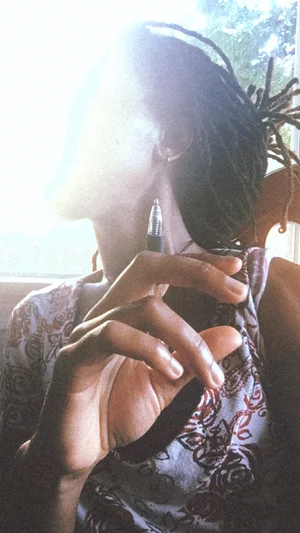
On a lighter note (not that you need one), I remember, in the early days of creating Vagabroad it was 100% impossible to find images of a Black woman journaling that were not posed, sanitized stock photos of corporate Black women. In response to this, I intentionally made images of my journal between my splayed brown legs, in my nutmeg brown arms, and being beheld by my brown visage. It was important to me to affirm the journaling practice as an inheritance of Black women, and furthermore, VGB as a Black woman’s space. This has become all the more urgent as today, social media has furthered the agenda of featurism, texturism and colorism; amplifying the mulatto and predictably only declaring beautiful the dark skinned woman whose features are as European/Western as they can possibly be: desirable/ marketable body and features. There tends to be a celebration and celebritization of the dark skinned Black woman ONLY when she is dislocated: amnesiac of her history and adjacent to/ a tool of capitalist agendas. Therefore, Carolina Maria de Jesus represents not only a witnessing against these layers of obsessions with whiteness, but also the weapon of the richly-melanated teastained woman’s recording and authorship against them in her private book.
The Dignity of Context
Next, de Jesus’ journal is required reading because it exemplifies the necessity of context in our journals. Context in the Black woman’s journal is the most honorable element/ tool of our entries, functioning as the setting of our journeys and the glue holding our entries together, pasting them to the times. Context in one’s diary fills in the factual things that should not be left to the imagination: What year is it? What faith/beluef system do you follow? Who is running for office? What is your ZIP Code? What street do you live on? What major protests are going on (Think of silver, right marches, Ferguson, millions March in New York City back in 2015 …)? What building was torn down? What laws have been created or repealed? What societies and foundations are counter to humanity? What city ordinance was passed? Who has been convicted of a crime or what major cases are transpiring (think Anita Hill, OJ Simpson, Menendez Brothers, The Central Park Five, Laci Peterson, Chris Watts)? What are major issues of your day (Think abortion rights, The OxyContin epidemic, mass incarceration or HIV/AIDS)? Is the bed under the window or next to the wall? What brand of tea or coffee was being drunk? What’s the weather doing? What laws are being passed? What day was the 14th of June that year? Context in our diaries helps our future self tell time well, also equipping our future self to ask substantial questions of our past self like “what was I doing at that time?”, “How did my Personal ideology at that time in my life influence my (non)participation in that protest?” or “how did my belief system impact how seriously I took this or that event/issue?” or “ Why were my feelings so lackadaisical at such a critical time period?” Context is how we are able to have a fuller picture that holds us accountable to our past and present lives.

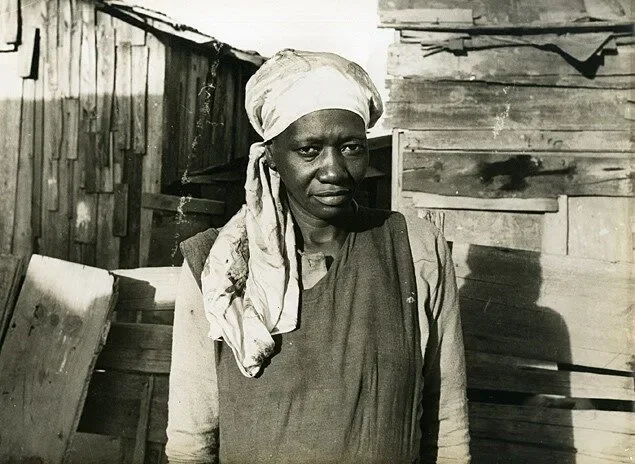
The context to Carolina? Brazil, 1955-61— the favela of Sao Paolo. Juscelino is president. She is a dark-skinned, Black single mother living in the slums. She was born 2 generations out from slavery, yet she is literate, and has erudite desires such as reading poetry and writing plays and songs. She is poor. She and her children are often starving. And is is the uderstanding of these dynamics as individuals and interconnected systems creates the context of her notebooks. You cannot see her as just a writer or as JUST a mother. She is an ambassador of the enmeshing of systemic injustices and societal caste that inform what she writes about herself and the world around her. This context instructs us on how to show her respect as a sentient being as we are reading her private writings. The context of poverty informs us of the plot against her life as a dark-skinned Black woman. Shes inconsequential to the colonizer; her observations have no meaning to him. She’s to have a short, torturous lifespan in the slums and then pass away without monument. Her voice is no threat because the coloniser’s system is meant to be louder than her cries; thus, she’s not meant to be seen or heard—certainly not listened to! Carolina broke the “rules” of apartheid by being able to read and write, then being WILLING to document her charges against the systems of inequality surrounding her and how the favelados could not escape their tendrils. She is a glitch, a concern to the coloniser’s world and wellbeing of his propaganda (as is all testimony)— to systems of white supremacy that demand that she obey the rules of caste by being silent, compliant, unresisting and unassertive. Her voice wasn’t “supposed” to leave the favela, yet it sounded the alarm around the world, decrying the violence of poverty and the premeditated blight used by systems of capitalism and fascism to keep peoples under control. Her diary was her portal, through which she walked and entered new worlds.
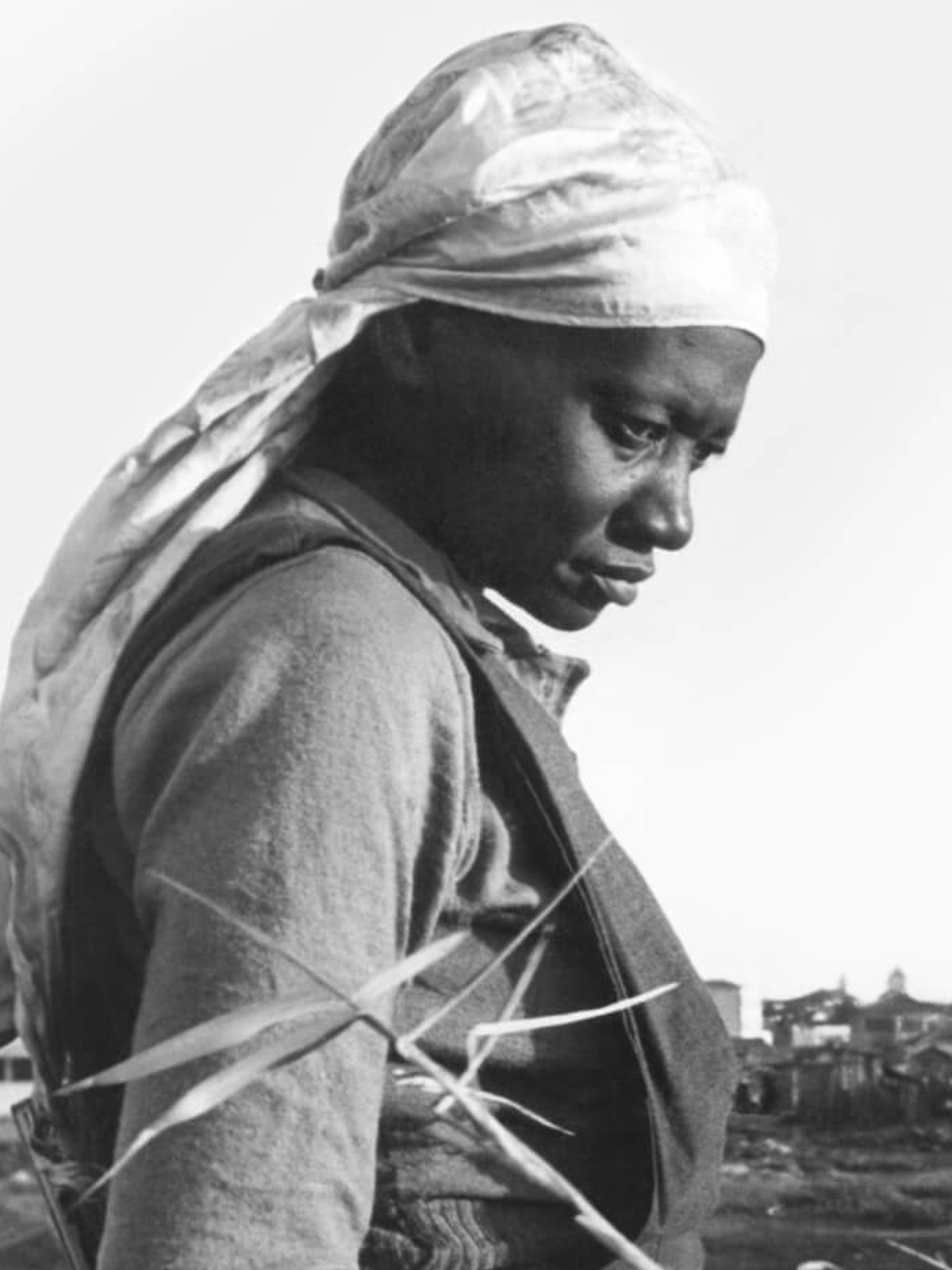
With visceral language, unyielding exposition and unapologetic naming of names, Dona Carolina made notes about the happenings of her daily life in the context of being a favelado: intuitively documenting her notes on systemic pathologies, the humiliation of classism/ caste systems, antiBlackness, observations of on vices that grip favelados due to the blight and unemployment, domestic abuse, the torture of starvation, the dehumanization of cyclical poverty, the homicidal quality of state-induced lack, the charlatanism and usury of priests and politicians, the crookedness embedded into the design of the favela, and the poor as a sordidly managed ilk of societal rejects. Her entries toggle between plain-language, gut-wrenching notes and blunt societal observations that excoriate politics and its agents. The writings are raw and that rawness decries the vile nuances, barriers and culture of the favela, while causing us today to interrogate the technology of poverty for any society that calls itself “civilised” or “advanced”. She records the world around her as the conspiracy that agonises and antagonizes her as an impoverished, single Black mother; a world wilfully turning its gaze from the favela and favelados– a blueprint for our own journaling. From her tin and cardboard shack, Momma Carolina gives herself and the reader (remember, she was aware that her words from the first journal, “Child of the Dark” were going to be published) the dignity of presence and narration with pen in hand, exposing the ploys of the dynamics surrounding her, and reinforcing her futurity and humanity in her book. The context to Carolina’s notebooks teaches us that context creates dignity for a person/people. Instead of isolating her from her place, when, and where, we can honour the fulness of her existence through examination of the key systemic pathologies, technologies and geography that framed her life.

Carlina with children, Vera Eunice, Jose Carlos, and Joao.
Finally, de Jesus’ journal is crucial to all of we teastained women because it preserves a firsthand account of a Black single mother whose children have different fathers. It requires no explanation that the Black single mother is a pariah in society, and unfortunately there are still echelons to “acceptance” when it comes to a Black single mother’s socioeconomic status and/ or if her children have different fathers. I will spare you a LONG rant on our society’s uniquely-expressed energetic and systemic vitriol reserved purely for Black single mothers. Violently, the world becomes a different/parallel universe for Black mothers raising their children alone, and Carolina Maria’s journal preserves narrations attesting to various levels of this truth. Today many of us are familiar with how Black single mothers are jutted into society’s underbelly like a subculture and low caste. They exist in a reality of dystopia many prefer to not know exists, and yet perhaps contribute to its sordid engineering whether via judgemental assumptions, ignorant statements, and most violent: outright neglect and ignoring of the Black woman raising children with no little to no true support. I believe this mirroring quality of de Jesus’ diary is key: If the reader is NOT a Black single mother they must assess how they would interact or exclude Carolina if she was in their social sphere today. Before you feel pathos for this slum-dwelling single mother of three who’s selling scrap metal to buy medicine that will cure her daughter of worms from infected food, assess how visible Black single mothers are to you in your daily life and the support you are ready to show them– or not and if not, then why. Momma Carolina’s journal may yield one to fall into the repetitive lingo applied to Black single mothers cyclically complimenting their strength and praising their ability to “do it all”-- a violent excuse to obey society’s command to isolate her as punishment for not maintaining her position as a partnered mother.
Empathy practiced in literature alone is vanity, draining one of their humanity for a false exercise, and if we are to empathize with Carolina Maria de Jesus it must be because we have a humanity that calls and responses to her in a modern form. Can you truly say in truth that we would include, support, provide mutual aid for, and love on a woman such as she? Would you “vibe match your tribe” your way into excluding her from your social circles? Would you feast on gossip about her at your dining table, as you throw away excess food and ask between swallows of girls night wine why she had “all them babies for different men anyway??” ? Of the greatest technologies to literature is how it holds a headlight to the soul, and with this diary we have a set of beamers poised to inquire: if god were a Black single mother, would you recognize her?
As a lucid, discerning diarist, Momma Carolina provides us with a valuable blueprint of what keeping a few indicting lines each day. We see in her journal what it means to be living proof, evidence, and witness leaving indicting entries as utterance of living through the detestable. Who else is willing to join her in this task?
Positionality
In his precedential work, Dark ghetto: Dilemma of Social Sower, Kenneth B. Clark describes what is known as the “involved observer”. While the involved observer is a professional role that he took on as a sociologist, one can transpose the ethos of an involved observer onto the diary practice of Carolina Maria de Jesus and see commonalities. Clark describes an involved observer as one who is from the community and is also aware of the pathological dynamics within the community enough to categorize and critique them. While Karolina was not a cultural anthropologist in this way, perhaps any of us today can find a benefit in using her writings as the basis for intentional observations of the weaponization of poverty and ghettos for the slow annihilation of Black people.
In contrast to the “participant observer” (the professional, who comes to visit the slums to make their professional notes and then go back to their side of town), the role of the involved observer “demands participation, not only in rituals and customs, but in the social competition with the hierarchy and dealing with the problems of the people [She] is seeking to understand.” And continues, describing that the involved observer
“runs the risk of joining in the competition for status and power, and cannot escape the turbulence and conflict inherent in the struggle. [She] must be exposed at the same time that [she] seeks to protect [herself] and to protect her role of observer. She must run the risk of personal attacks, disappointments, personal hurts and frustrations, at the same time that she maintains a disciplined preoccupation with her primary goal of understanding.”
Furthermore, Clark admits that
“probably the most difficult assaults to which [she] will be subjected as the questioning of [her] personal motives, the veiled and at times rather flagrant assertion that [her] concern with the problems of the community stems from a desire for personal power or material gain. In a ghetto community where the material rewards are hard to come by, the motives of almost everyone are suspect. It is not easy for even the more intelligent or more sophisticated prisoners of the ghetto to believe that anyone could be motivated primarily if not exclusively by the desire to understand the depth of the human predicament. How much more difficult than for the scarred or hardened victims of the ghetto to believe that anyone could desire, genuine, social change or social justice.”
As the reader of Carolina’s diary progresses through her notebooks, they will notice her active realization of her anomaly of juxtaposition as both literate and a favela dweller. For de Jesus, being a favelado means that she can trumpet the injustices that are endemic to the horror and terribleness of slum dwelling; the blighted, dilapidated environment depraved by the vice and hopelessness of its dwellers— and she is also actively cognizant that she and her children cannot stay in/ do not belong in that place. Dona Carolina understands the troubles of the favela and wishes to denounce them for as long as she is there, but she has an unspoken hope for the expiry of her troubles, her poverty, and bears witness against the pathologies in the favela, while also shaping her will to leave it. Clark affirms this dynamic: “… it is the ultimate test of strength… [For the involved observer] to discipline [herself] and attempt to control [her] defensiveness, [her] doubts concerning the adequacy of self, and above all [her] desire to escape before the completion of [her] task.” Carolina inadvertently performed the duties of the involved observer, where her being part of the favela and documenting the dynamics, violence, agents of chaos, causes and effects enabled her to have agency in being both part of and apart from the character of the slum in which she lived.
As sojourners en route, this has huge implications for how we keep our journal, journeying soulfully so as to be part of our environments but also, NOT. Writing about where we are in life with enough disconnect from circumstance to diagnose and denounce it, guarding our character for the worlds beyond that need us and our insights.
Sources:
Clark, Kenneth B. Dark Ghetto: Dilemmas of Social Power. Harper & Row, 1965.